Featured

Decreased Access to Reproductive Health Care Globally

Decreased access to reproductive health care globally causing an increase in sexually transmitted diseases, unintended pregnancies, insufficient prenatal care, and unsafe abortion, especially in developing countries. 

What is Health Policy?

Health policy is authoritative decisions made by any branch of government that direct or influence the lives of others (Longest, 2010). Often health policy in the US is thought of on the national level and not on the international level. However, decisions made about allocative health policy can have a huge impact on the international level.

The Problem

What truly is a problem to the government is greatly debated. It comes down to semantics what each political party believes. Additionally, a condition becomes a problem based on the values, comparisons, and categories placed on it (Kingdon, 2010). Often problems can fade and become less prominent in governmental minds and platforms. The health topic to be discussed here is one of the few problems that has been debated for a long time and is not leaving the political scene anytime soon, access to reproductive health care. However, this blog will focus on it with a new lens, a global lens.

Health Policy Topic

Decreased access to reproductive health care globally.

Why does this matter? It is causing an increase in sexually transmitted diseases, unintended pregnancies, insufficient prenatal care, and unsafe abortions, especially in developing countries.

Background

To understand the problem, one needs to understand the history behind the problem. Since the 1970’s there have been laws in the United States (US) regulating how US foreign assistance dollars can be used related to family planning and abortive services. After Roe v. Wade, Congress has passed amendments that restrict or dictate on how US foreign aid can be spent abroad on family planning or abortions (Blanchfield, 2019).  Previously passed amendments include:

Helms Amendment (1973) stated:

“None of the funds made available to carry this part may be used to pay for the performance of abortions as a method of family planning or to motivate or coerce any person to practice abortions” (as cited in Blanchfield, 2019, p. 3)

DeConcini Amendment 1985

This amendment was introduced to counter policy put in place by President Reagan that previously had focused US aid to groups that focused on natural family planning like abstinence. It stated, “the United States would only fund family planning projects that offer a range of family planning methods and services, either directly or through referral” (Blanchfield, 2019, p. 5)

Kemp-Kasten Amendment 1985

This amendment states that money given by the US cannot be used towards any organization the President deems to support abortions or involuntary sterilization (Blanchfield, 2019). It was written under President Reagan due to concerns that the U.N. Population Fund’s (UNFPA’s) program in China was being used for abortions. Currently, under this amendment, President Trump is not giving money to UNFPA.

In addition to the Congressional amendments, the executive branch has historically signed two policies addressing abortion and family planning. The one to be discussed here was “The Mexico City Policy” also known as “Protecting Life in Global Health Assistance” (PLGHA) or more recently, in the media as the “The Global Gag Rule” (Blanchfield, 2019). The Mexico City Policy was first passed under President Reagan in 1984. This policy stated no US funds, received by nongovernmental organizations (NGOs) for family planning, could be used for abortive services or involuntary sterilization procedures; however, recipients of US foreign aid could use other money to engage in “abortion-related-activities” (Blanchfield, 2019, pp. 10) if the monies were in separate accounts. Organizations and groups that received USAID grant money were required to sign a contract that stated no US aid would be used perform or promote abortions as a family planning method.  

As the presidency has changed between parties, the Mexico City Policy has been revoked and reinstated. Under President George W. Bush, the policy was reinstated but exceptions were put into place to allow abortions. These exceptions were “for cases of rape, incest, conditions that threatened the life of the mother, and for postabortion care” (Blanchfield, 2019, p. 11). He later added an additional exception for funds provided “through the President’s Emergency Plan for HIV/AIDS Relief (PEPFAR), and intergovernmental organizations, such as the United Nations and its affiliated entities” (Blanchfield, 2019, p. 11). The policy was then again revoked by President Obama in 2009.

In 2017, under President Trump, PLGHA was not only reinstated but expanded to all health organizations receiving US foreign aid. This expansion includes “programs addressing HIV/AIDS, maternal and child health, malaria, global health security, and family planning and reproductive health” (Blanchfield, 2019, p. 12). Therefore, if a health organization provided care outside of family planning but referred a patient to a place to receive abortion care, the organization could lose their US funds.

Impact on Developing Nations

Watch this video produced by Population Connection Fund on the Impact of the re-instatement of the Global Gag Rule in Nigeria.

Women all around the world are being impacted by policies being made by foreign countries. The goal of the PLGHA is to reduce the number of abortions occurring, instead, numbers of unsafe abortions are increasing due to an increase in the number of unintended (Brooks, Bendavid, & Miller, 2019). Instead of decreasing abortions, PLGHA is decreasing access to comprehensive sexual education and family planning that prevents pregnancy.

Current Legislation

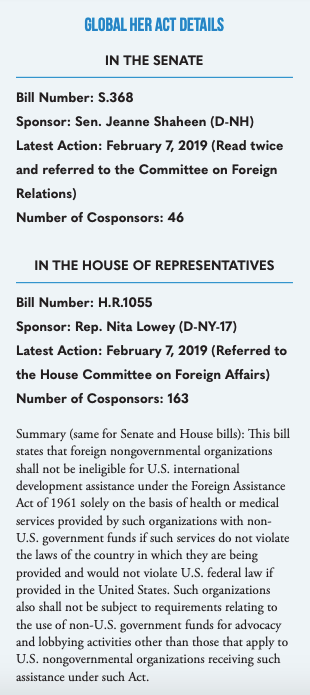
The newest legislation is the Global Health, Empowerment, and Rights Act (Global HER Act). This bill would repeal the Mexico City Policy and prevent future presidents from re-instating it. For more details, see image below from Population Connection, click for full document.
References

  • Blanchfield, L. (2019). Abortion and Family Planning-Related Provisions in U.S. Foreign Assistance Law and Policy (CRS Report No. R41360). Retrieved from https://fas.org/sgp/crs/row/R41360.pdf
  • Brooks, N., Bendavid, E., & Miller, G. (2019). USA aid policy and induced abortion in sub-Saharan Africa: an analysis of the Mexico City Policy. Lancet, 7(8), E1046-E1053.
  • Kingdon, J.W. (2010). Agendas, Alternatives, and Public Policies, Update Edition (2nd ed.). London: Longman Publishing Group
  • Longest, B.B. Jr. (2010). Health policymaking in the United States (5th ed.). Chicago, IL: Health Administration Press.
The IMPACT

FINANCIAL IMPLICATIONS OF THE GLOBAL GAG RULE AND SUSTAINING INNOVATION FOR CHANGE

https://www.plannedparenthoodaction.org/communities/planned-parenthood-global/end-global-gag-rule

Finances- the biggest part of the global gag rule.

We have discussed the history, the playmakers, and the legislation, but what about the finances?

The Global Gag Rule States that non-governmental organizations (NGOs) will lose their US funding if they discuss or provider abortion services.

So, what does this look like? What does this mean for the people who are served by these NGOs? Watch the clip below.

The numbers from the video are sobering.

25 million cut off from birth control

            More unintended pregnancies

            More unsafe abortions

            More maternal deaths

With the implementation of the Protection of Life in Global Health Assistances, the financial impact went from applying to $600 million per year (under the Mexico City Policy) to $9 billion per year of US global assistances (Population Connection Action Fund, 2020). This means The PLGHA has an impact of 15 larger than the Mexico City Policy did under President George W. Bush.

In an excerpt of an article by The American Prospect, the Director of Policy Research at CHANGE discusses the impact of the Global Gag Rule on the Mozambican Association for Family Development (known by its Portuguese acronym, AMODEFA).

“Bergen Cooper, Director of Policy Research at CHANGE, notes that one of the most critical issues for people on the ground is the loss of health-care services, particularly for women and girls. For the Mozambican Association for Family Development (known by its Portuguese acronym, AMODEFA), inability to comply with the gag rule meant that the group had to end many of its services, including HIV consultations for girls and young women. The national health organization, which works on HIV, tuberculosis, and malaria prevention and other health problems, stands to lose 60 percent of its budget because of Trump’s gag rule.

“When they got U.S. government funding, they were able to provide 6,800 HIV consultations to girls and young women during a three-month period,” Cooper says. “Once they lost U.S. funding … they were only able to reach 833. That’s a drastic difference.” According to UN AIDS data, Mozambique saw 83,000 new HIV infections in 2016 and 1.8 million citizens living with HIV. In 2017, approximately 2.1 million Mozambicans live with HIV.”

(Rowthorn, 2018)

So, where do we go from here to sustain innovation? What is the innovation?

GET INVOLVED IN POLITICS.
EDUCATE YOURSELF ON HOW TO BE A VOICE TO YOUR REPRESENTATIVES.

Population Connection Action Fund, as well as, Fight4HER are two organizations that can work as a launching point.

When speaking with an Arizona Organizer from Fight4HER, she stated the best thing an individual can do is “know the facts and be a voice” (personal communication, March 26, 2020). At the time of the interview, she was helping prepare for Population Connection Action Funds Digital Capitol Hill Days that was going to include a digital advocacy session and a Digital Lobby Day.

Though the Digital Capitol Hill Days weekend has passed, the videos remain. Click the link BELOW for the playlist of videos

Additionally, the Arizona Organizer, from Fight4HER, recommended filming “a selfie video about why “I #Fight4HER?” and share it on twitter with the hashtag “Fight4HER

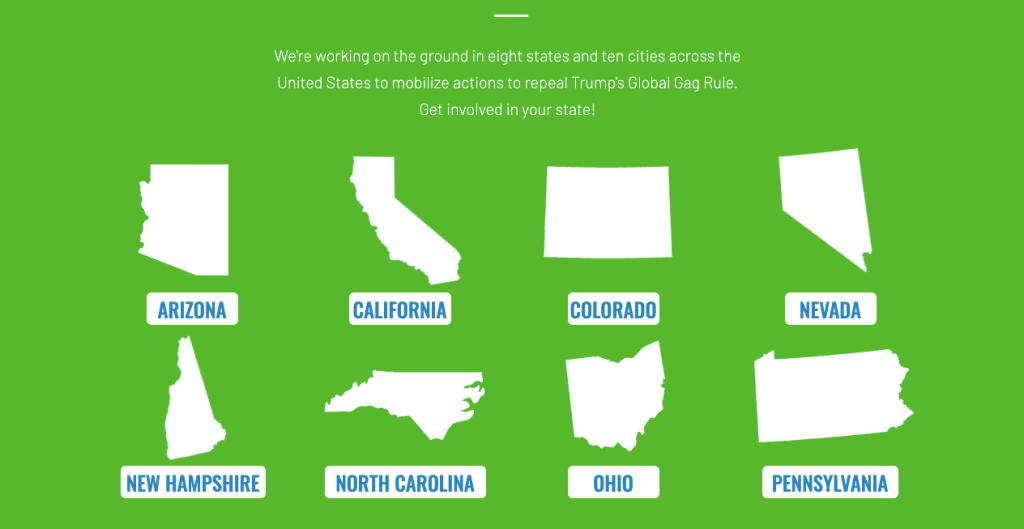
These were just a few of her suggestions. Individuals who want to become more involved can get involved with Fight4HER in their states. See the image below for where Fight4HER is currently working.

https://www.iwillfight4her.org/take-action

I hope after reading this blog you can see how women around the world need the voices of those in the US to increase access to reproductive health and decrease the incidence of sexually transmitted diseases, unintended pregnancies, insufficient prenatal care, and unsafe abortions.

https://www.iwillfight4her.org/

Reference

Anonymous. (March 26, 2020). [Phone Interview]

Fight4HER. (2020). Take action. Retrieved from https://www.iwillfight4her.org/take-action

Population Connection Action Fund. (March 28, 2020). The Chilling effect: How the U.S. exports its anti-choice agenda [Video File]. Retrieved from https://www.youtube.com/watch?v=mEmqygJj9gA&t=152s

Rowthorn, N. (2018). The cost of Trump’s Global Gag Rule. Retrieved from https://prospect.org/power/costs-trump-s-global-gag-rule/

The Global Gag Rule and Technology Innovation

Technology innovations for women’s health go beyond reproductive health. When discussing the global gag rule and technology, the first thought I had was of telehealth abortions. A telehealth abortion is when a woman speaks with a provider through a telephone, video chat, or other technology way to discuss and be prescribed medication for a medical abortion (Donovan, 2019).  However, beyond telehealth abortions, other innovative technologies are a large part of women’s health. These technologies include portable ultrasound, artificial intelligence, and handheld devices to help detect breast cancer (Powell & Moncino, 2018).

The U.S. Agency for International Development Maternal and Child Health (USAID MCH) program helps women and children globally to improve health in low- and middle-income countries. Beyond program support, USAID MCH also supports innovation and technologies.

“USAID MCH also supports identifying, testing and piloting technologies and innovations aimed at improving the lives of women and children. In 2011, for instance, in partnership with other donor countries and private foundations, USAID launched Saving Lives at Birth: A Grand Challenge for Development, which has invested in more than 100 innovations, from service-delivery approaches to diagnostics.” (Boyer, 2018).

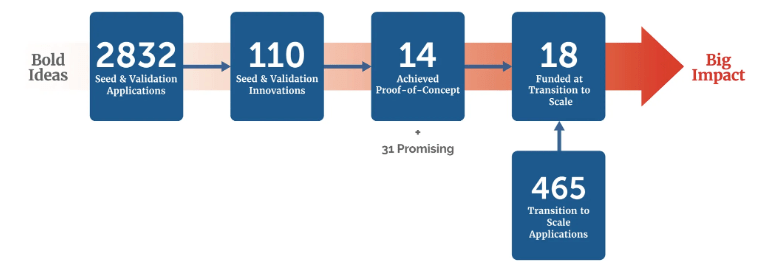
May projects have been submitted to the Saving Lives at Birth program. (see the illustration below)

https://www.grandchallenges.ca/programs/saving-lives-at-birth/

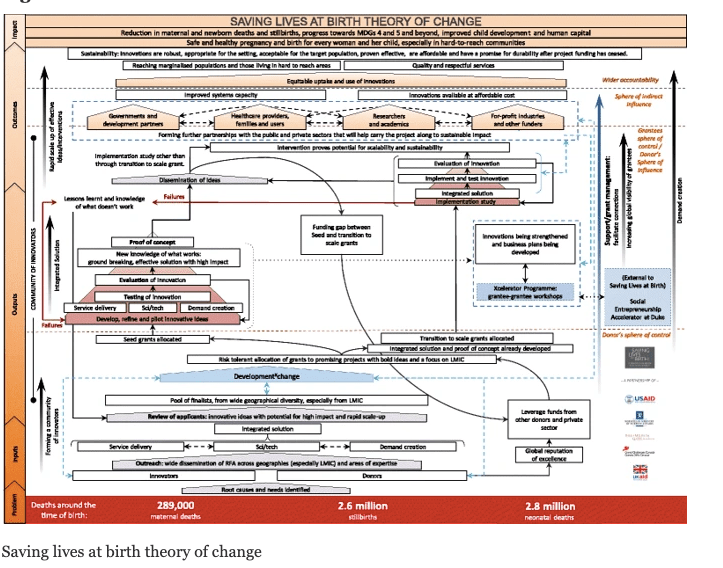
One failure of the Saving Lives at Birth program was their lack of a tool to track progress. Lalli et al. (2018) applied the theory of change to the program to provide a framework to the program. The researchers retrospectively applied the theory of change using 10 core impact indicators and five process indicators. (See graphic below). The results of the study showed areas of improvement from the first four rounds of the program to improve its function for future implementation.  

(Lalli et al., 2018)

With the use of any new technology comes the concern for privacy of data. However, before those concerns can be addressed, first the global gag rule needs be permanently reversed.

“The policy threatens the provision of health services in developing countries, increases the risk of unintended pregnancies and unsafe abortions, and violates medical ethics”

(Boyer, 2018)

Unfortunately, from all the good that the Saving Lives at Birth program, as well as, the other innovative technologies discussed are doing could be stunted due to the global gag rule. Because these non-governmental organizations (NGOs) are limited by what they can discuss with a patient if they receive US foreign aid. NGOs can be negatively impacted in two ways from the global gag rule. First by losing funding by choosing to discuss abortions. If this occurs, then the technologies discussed above may not be available to purchase or utilize due to lack of funds. Second, an NGO could choose to abide by the stipulations of the global gag rule and receive funds, but they could be limited in their professional relationships with the community due to mistrust that could occur due to not offering comprehensive care.

References

Boyer, J. (2018). What congress can do to restore the U.S. leadership on global sexual and reproductive health and rights. Guttmacher Policy Review, 21, 56-61.

Grand Challenges Canada. (2020). Saving Lives at Birth. Retrieved from https://www.grandchallenges.ca/programs/saving-lives-at-birth/

Lalli, M. Ruysen, H., Blwencome, H. Yee, K. Clune, K., De Silva, M . . . . Lawn, J. E. (2018) Saving Lives at Birth; development of a retrospective theory of change, impact framework and prioritised metrics. Global Health 14(13). https://doi.org/10.1186/s12992-018-0327-z

Powell, C. & Moncino, M. (2018). New, Affordable technology is improving women’s health access. Retrieved from https://www.cfr.org/blog/new-affordable-technology-improving-womens-health-access

Private Sector and Aid for International Family Planning

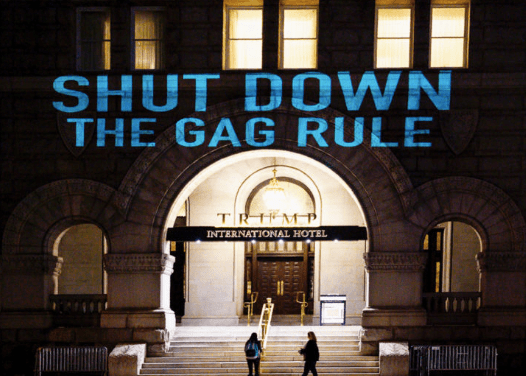
Private sector is the part of the economy NOT controlled by the government. This can be further split into two groups, for profit and nonprofit organizations.  Longest (2010) discusses the two necessary components for policy makers and private sector originations to successfully work together to move polices forward. First and foremost, private sector groups need to be passionate about the policy objective. An example of a private sector group that is passionate about the US giving international aid for family planning is one I have mentioned on here many times, Population Connection. On January 24th, 2019, the second anniversary of the expansion of the Mexico City Policy, the group took their passion to the streets and displayed a message along the Trump Hotel. See the video below:

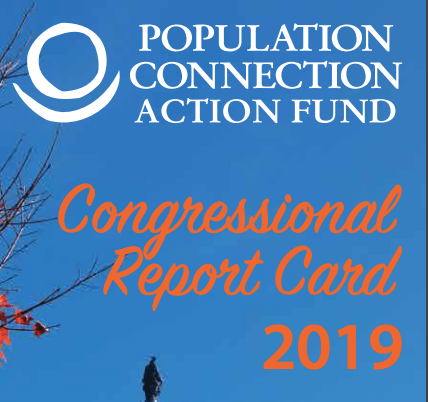
Beyond making their messages known, Population Connection also focuses a portion of their website to elections. Their mission is to “elect candidates who understand the importance of family planning and access to reproductive health care” (Population Connection Action Fund, 2020). By stating who they as an organization endorse, helps others who have similar views to know which candidates support bills for the health of women around the world. Furthermore, Population Connection Action Fund not only reports on who will support them in the future but posts a report card for who has supported their positions in the past. For example, in Arizona, Senator Krysten Sinema supports Population Connection, while Martha McSally opposes their position. The report card goes on to cover state House Representatives as well (Population Connection Action Fund, 2019).

The second important component of moving policy forward with a partnership between the private sector and policy makers is having means to implement the policy (Longest, 2010). This means the monetary and personnel needs. Many non-governmental organizations (NGO) have the personnel to move forward with international family planning they just need the unrestricted monetary support from the US international aid.

An innovative group in the private sector is the Results for Development. Their mission is to “create and support global communities of innovators, funders and policymakers for continuous and iterative learning, knowledge generation, exchange and collaboration” (Results for Development, 2020a). On their site, they have an entire page dedicated to support for international family planning organizations. They are working with another NGO Population Services to “to link franchisors and private sector health care providers with new sources of funding to expand family planning and reproductive health services to the poorest women and girls” (Result for Development, 2020b).

Though this just covers two of the many groups out there, more resources can be found on both of their websites linked below. I encourage you to look at the Congress Report Card put out by Population Connection Action Fund and see how your state representatives have voted in the past.  Also, to look at the list of resources provided by Results for Development and see what has been done in the past to assist NGOs in other countries providing reproductive care to women and girls.

Population Connection Website

Population Connection Report Card

Results for Development Resources: Support for International Family Planning Organizations

References

Longest, B.B. Jr. (2010). Health policymaking in the United States (5th ed.). Chicago,IL: Health Administration Press.

Population Connection Action Fund. (2020). Elections. Retrieved from https://www.populationconnectionaction.org/elections/

Population Connection Action Fund. (2019). Congressional report card 2019. Retrieved from https://www.populationconnectionaction.org/wp-content/uploads/2019/10/2019-Report-Card.pdf

Results for Development. (2020a). About. Retrieved from https://www.r4d.org/about/

Results for Development. (2020b). Resources: Support for international family planning organizations 2 (SIFPO2). Retrieved from https://www.r4d.org/resources/resources-support-for-international-family-planning-organizations-2-sifpo2/

Public Sector Influence on Global Reproductive Health

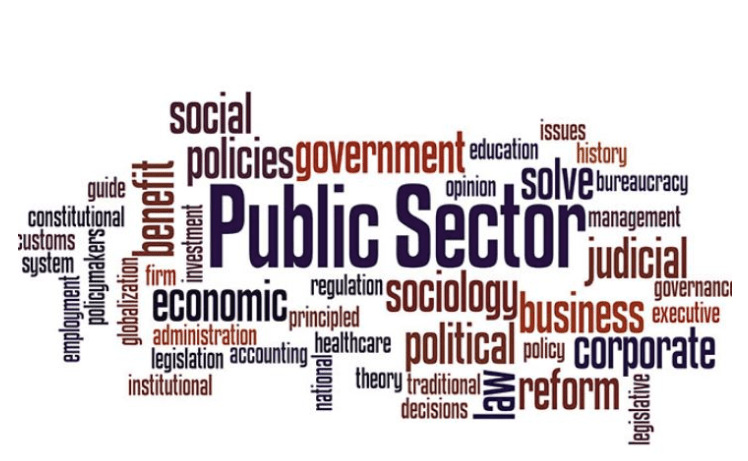
Public sectors when looking at the national level refer to all the agency and offices under the government. This includes all organizations from the federal level, down to the municipal or local level. However, when looking at an international policy the public sector switches to a view of the global sector. Though federal public sector institutions have an impact on decision made on international aid, so do international organizations. Thus, to understanding a decrease of access to reproductive health care globally, with a lens of United States (US) federal policy, both the public sector impact and global sector impact need to be examined.  

Retrieved from https://www.kff.org/report-section/the-u-s-government-engagement-in-global-health-a-primer-report/

Influential US Government Public Sector Institutions

US Agency for International Development (USAID)

The USAID runs the international family planning and reproductive health (FP/RH) programs. “U.S. funding for FP/RH is governed by several legislative and policy restrictions, including a legal ban on the direct use of U.S. funding overseas for abortion as a method of family planning” (KKF, 2019). Even with the restrictions that are in place, USAID helps manage FP/RH programs in over 30 countries. See the table below for current interventions.

Retrieved from https://www.kff.org/global-health-policy/fact-sheet/the-u-s-government-and-international-family-planning-reproductive-health-efforts/

Department of Health and Human Services

The Department of Health and Human Services houses the Centers for Disease Control and Prevention (CDC).

Centers for Disease Control and Prevention (CDC)

The CDC has made efforts for reproductive health care globally by involvement in research and surveillance.  Furthermore, they have supplied technical assistance, and are a designated World Health Organization Collaborating Center for Reproductive Health (KKF, 2019).

International Organizations Influence on Policy

United Nations (UN)

 Millennium Development Goals (MDGs) was adopted in 2000 by the UN. Three of the eight goals apply to health and of those three, two directly apply to the decrease in access to the reproductive health care. Goal 5 was to improve maternal health and Goal 6 was to combat HIV/AIDS, malaria and other diseases (Institute of Medicine, 2009). This was replaced in 2015 with Sustainable Development Goal (SDG). Goal 3 of the SDG is to achieve universal access to reproductive health care (KKF, 2019).

The US government has previously worked with the UN by contributing to the UN Population Fund (UNFPA). However, under the current administration, contributions were not included in the 2017 or 2018 fiscal budget (KKF, 2019). The President WITHHELD contributions to the UNFPA due to the Kemp-Kasten Amendment. For more information on why see THIS blog post.

Family Planning 2020 (FP2020)

FP2020 is an “international partnership to expand access to family planning services in which the U.S. is a core partner” (KKF, 2019). The goal of FP2020 is to provide VOLUNTARY family planning to over 120 million girls and women globally in developing countries.

SO Where Does This Leave US

Overall, increasing access to family planning and reproductive health care has been influenced both nationally and internationally by the public sector. It is obvious that policy making is influenced greatly in the US, by both self-interest, as seen with the current administration, and public sector institutions (Longest, 2010). However, the focus needs to shift from self-interest to a lens of what is best for the girls and women of the world.

Reference

Institute of Medicine. (2009). The US commitment to global health: Recommendations for the public and private sectors. Retrieved from https://www.ncbi.nlm.nih.gov/books/NBK23788/

Kasier Family Foundation. (2019). The U.S. government and international family planning & reproductive health efforts. Retrieved from https://www.kff.org/global-health-policy/fact-sheet/the-u-s-government-and-international-family-planning-reproductive-health-efforts/

Longest, B. B. Jr. (2010). Health policymaking in the United States (5th ed.). Chicago, IL:  Health Administration Press.
Playmakers, Statutes, and Regulations on International Foreign Aid for Reproductive Healthcare

Understanding Connotation

I remember the first time I heard in school the importance of word choice due to the concept of connotation of words. Previously, I had not thought about the feelings a word could invoke beyond its literal definition.  Words with strong connotations are a favorite of the media because a controversial topic means one thing, increased viewers.  Furthermore, each news outlet knows what their viewers want to hear and therefore will spin the topic to fit their viewers’ beliefs. This can be a slippery slope as the media can strongly affect public opinion (Kingdon, 2010). To many, the word abortion holds a strong connotation, either positive or negative. Just the word can either form an ally or start an argument. The energy around the word makes abortions a popular media topic. The reason those who oppose the Mexico City Policy have taken to calling it “the Gag Rule” is due to connotation. The Mexico City policy does not draw the same emotions as the word Gag.

To fully understand the strong feelings around the word abortion, a dive into the history of abortions is needed. Though previously I discussed the history of the Mexico City Policy (see THIS blog post), a further explanation is needed to explain why it was even started.

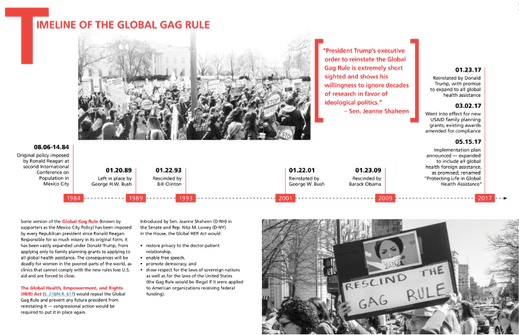
For a refresher on the timeline of the policy see the below graphic:

Retrieved from: https://www.populationconnection.org/magazine/september-2017/

History of Abortions in the United States

            From the 1880’s until 1973 abortions in the United States (US) were illegal. In 1973, the Supreme Court made the decision on Roe v Wade to save the lives of women and keep abortions safe and legal (National Abortion Federation, 2020). Once the decision was made domestically, the Helms Amendment was passed in the same year stating that US funds could not be used to perform abortions internationally (Blanchfield, 2019). This later led to executive decisions to further govern how US international aid was used in the reproductive healthcare realm.

Main Playmakers

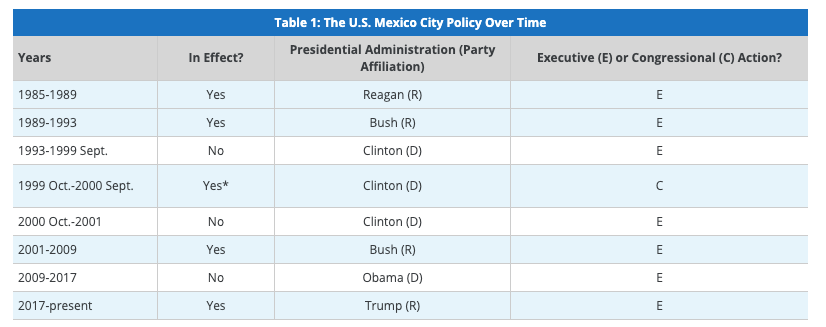
The biggest playmakers historically and currently in the access to reproductive care globally are the past and current President. Since 1984, depending on which party was in control of the White House, determined if the policy was in affect or not. For details on how each administration has handled the policy over time, see the below table:


Retrieved from: https://www.kff.org/global-health-policy/fact-sheet/mexico-city-policy-explainer/

Supporting Playmakers

 Beyond the government many groups have banded together to argue against the regulations placed on international US aid. One of the organizations that is leading the fight is Population Connection. They are lobbying Congress for a bill to repeal the Mexico City policy and increase US foreign aid for family planning.

Statutory and Regulatory Mechanisms

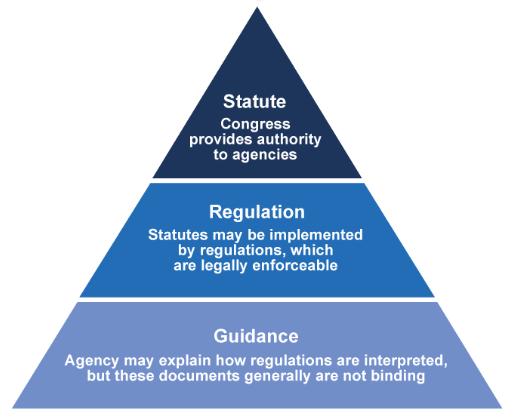
Before looking at the statutory and regulatory mechanism related to the access to reproductive health care globally, an understanding of the two terms is needed. First, both are requirements of the law. Meaning failure to comply will result in legal action.  In shortened form, Spengler (2018) explains it simply:

“A statute is a law, enacted by the state or federal legislature. Regulations are rules set by agencies that fill in the ambiguous areas of laws.”

Another way to look at it is by the graphic put together by the U.S. Government Accountability Office:


Retrieved from: https://www.gao.gov/products/gao-18-436t

With the base understanding of what statues and regulations are, a closer look at the statutory and regulatory mechanisms surrounding the access to reproductive health care globally can be examined.

How can statues and regulations made in the US affect countries globally?

The simple answer…. FUNDING.

On his first day in office President Trump signed an executive policy not only reinstating the Mexico City policy but expanding it. The expansion applies the restriction of funds to any “global health assistance furnished by all departments or agencies” (Barot, 2017). In May 2017, details on the expansion were released with the new name of the policy. Protecting Life in Global Health Assistance. The details explained that agencies who received “global health assistance appropriated under the State Department, the U.S. Agency for International Development (USAID) and the Department of Defense” (Barot, 2017) could not discuss abortions. This impacted 697 countries who receive funding from the US for programs for HIV/AIDs, maternal and child health, malaria, nutrition, and Zika. This also impedes the access to abortions for women in countries who legally allow them due to agencies not discussing abortions as an option due to fear of losing funding.

At the legislative level, bills have been introduced to further expand the Protecting Life in Global Health Assistance and repeal the policy (Kaiser Family Foundation [KFF], 2020). H.R. 661 and SB. 190 codifies the policy. Both have been referred to committees. The Global Health Empowerment and Rights Act (Global HER Act) SB 368 and H.R. 1055 on the other side repeals the policy and would make it impossible for future administrations to re-instate the Mexico City policy. Both have been referred to their respective foreign affairs committees (KFF, 2020). Only time will tell what the outcome will be. In the meantime, women in foreign countries are suffering and abortion rates are increasing.

References

Barot, S. (2017). When antiabortion ideology turns into foreign policy: How the global gag rule erodes health, ethics and democracy. Retrieved from https://www.guttmacher.org/gpr/2017/06/when-antiabortion-ideology-turns-foreign-policy-how-global-gag-rule-erodes-health-ethics

Blanchfield, L. (2019). Abortion and Family Planning-Related Provisions in U.S. Foreign Assistance Law and Policy (CRS Report No. R41360). Retrieved from https://fas.org/sgp/crs/row/R41360.pdf

Kaiser Family Foundation. (2020). U.S. global health legislation tracker. Retrieved from https://www.kff.org/global-health-policy/fact-sheet/u-s-global-health-legislation-tracker/

Kingdon, J.W. (2010). Agendas, Alternatives, and Public Policies, Update Edition (2nded.). London: Longman Publishing Group

National Abortion Federation. (2020). History of abortion. Retrieved from https://prochoice.org/education-and-advocacy/about-abortion/history-of-abortion/

Splenger, T. (2018). Difference between statutes & regulations. Retrieved from https://legalbeagle.com/7618446-differences-between-statutes-regulations.html

Ethical Impact of Healthcare Policy

A close up of a sign

Description automatically generated

Policy making is a political process over a rational process (Longest, 2010). More than just ethics or personal beliefs play into how laws and regulations play out. The personal preferences and beliefs of the individuals that will get the policy maker reelected play a large role as well as bargaining and vote trading that occurs between policy makers (Longest, 2010). Both comprehensive family planning and foreign aid are highly political topics that carry very specific viewpoints by the opposing parties.

In the United States (US), the political climate over safe abortions has escalated during the Trump administrations. Many women have stated that the government should not have the ability to decide what women can do with THEIR bodies. This was the basis of the Roe vs Wade Supreme Court case.  However, as discussed in the previous blog post, foreign aid for family planning and abortive services has been a “hot topic” since the early 1970’s with the Helms Amendment. It leads to the question: if women IN the US, have the freedom to choose what they want to do with THEIR bodies, what gives the US the right to dictate how women in OTHER countries receive services for family planning?

A close up of a sign

Description automatically generated

When the Mexico City Policy has previously been reinstated, the use of modern contraception dropped 14%, the incidence of pregnancy went up 12%, and the number of abortions increased 40% in sub-Saharan Africa (Brooks, Bendavid, & Miller, 2019). The researchers compared data from 2001-2008 when the policy was in place versus data from 1995-2000 and 2009-2014 when it was inactive. It is known that closer interval pregnancies and frequent abortions are not healthy for a female or the infant (Mahande & Obure, 2016). Codes of ethics in the healthcare field call those in the profession to do no harm (American Medical Association, 2016; American Nurses Association, 2015). If a US policy is causing women in other countries to end up in harm’s way is this ethical? If the US prides themselves in freedom of religion is it ethical to use religion as an argument for not supplying aid to nongovernmental agencies that discuss the topic of abortions? Furthermore, if the US governments main goal by instituting the Mexico City Policy is to prevent/decrease abortions and the opposite is occurring why are lawmakers not questioning the policy?

Comprehensive healthcare, including family planning, is a RIGHT, not a political position.

Ethical impact in Real Life

Olabukunola Williams, Executive Director of Education as a Vaccine in Nigeria, explains the wide-ranging impact of the harmful policy

References

American Medical Association. (2016). AMA principles of medical ethics. Retrieved from https://www.ama-assn.org/delivering-care/ama-principles-medical-ethics

American Nurses Association (2015). Code of ethics for nurses with interpretive statements. Silver Spring, MD: Nursesbooks.org

Brooks, N., Bendavid, E., & Miller, G. (2019). USA aid policy and induced abortion in sub-Saharan Africa: an analysis of the Mexico City Policy. Lancet Global Health, 7, e1046-1053. http://dx.doi.org/10.1016/S2214-109X(19)30267-0

Longest, B.B. Jr. (2010). Health policymaking in the United States (5th ed.). Chicago,IL: Health Administration Press.
Mahande, M.J., Obure, J. Effect of interpregnancy interval on adverse pregnancy outcomes in northern Tanzania: a registry-based retrospective cohort study. BMC Pregnancy Childbirth 16, 140 (2016). https://doi.org/10.1186/s12884-016-0929-5

Design a site like this with WordPress.com
Get started